For older adults living in retirement communities, connection is more than just companionship—it’s a vital part of emotional wellness, cognitive health, and day-to-day happiness. While the transition to senior living can come with uncertainty, one of the greatest sources of comfort is the chance to build new friendships and feel part of a meaningful community.
But a strong community doesn’t form overnight. It takes intention, structure, and small everyday moments to help residents feel at home. Whether you’re a staff member, a family advocate, or a resident yourself, here are some tried-and-true strategies for strengthening bonds in retirement facilities.
🛋️ 1. Design Welcoming Shared Spaces
The environment plays a key role in fostering connection. Comfortable, accessible common areas naturally encourage interaction—whether it’s a cozy lounge, a shared garden, or an open dining hall.
Creating spaces that invite residents to linger, sit, and talk helps conversations happen organically. A few armchairs in a sunlit hallway or a puzzle table in a quiet corner can make a big difference.
🧶 2. Organize Purposeful Group Activities
Activities are at the heart of social engagement. Group classes and events offer structure and fun while giving residents opportunities to get to know each other in low-pressure settings.
Some especially effective options include:
- Art classes and collaborative crafts
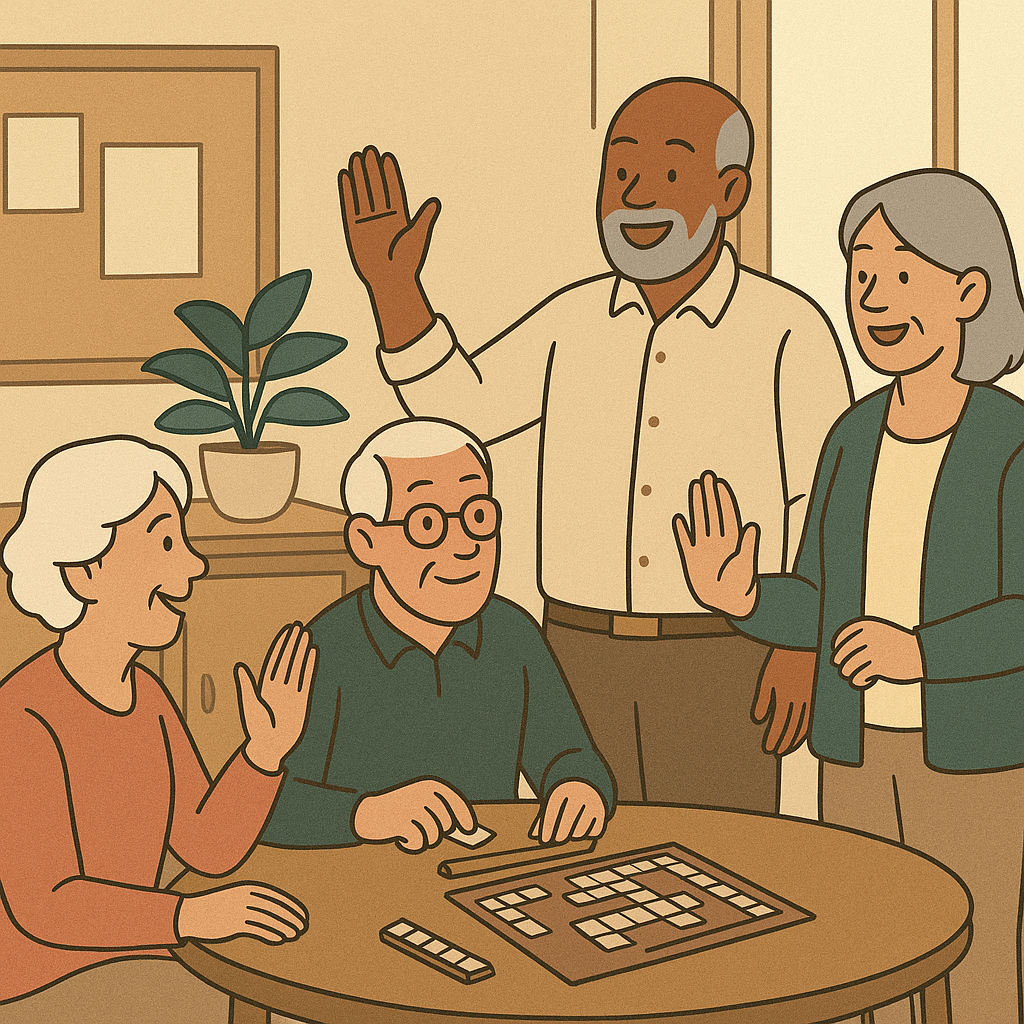
- Group games like bingo, cards, or trivia
- Fitness sessions (like chair yoga or walking clubs)
- Book clubs or discussion groups
- Intergenerational visits or storytelling hours
The key is to offer variety and allow residents to engage at their own pace.
📖 3. Celebrate Individual Stories
Every resident brings a lifetime of experiences, skills, and memories. Making space for those stories not only honors each person—it helps others connect on a deeper level.
Ways to encourage sharing might include:
- “Resident Story” spotlights
- Memory boards or photo walls
- Small group chats where everyone shares a life highlight
Storytelling fosters empathy, understanding, and lasting friendships.
🍲 4. Use Mealtime as Connection Time
Eating together is one of the oldest ways humans bond. In retirement communities, shared dining experiences offer daily chances to connect.
Encourage flexible seating arrangements to prevent cliques or host themed meals and conversation starters. A simple “What was your favorite dish as a child?” can spark stories and laughter.
🤝 5. Encourage Resident Leadership
Empowering residents to take ownership of their community helps build pride and strong peer relationships. From running hobby groups to helping welcome new members, these roles give residents purpose and create natural points of connection.
Examples include:
- Resident-led clubs (gardening, games, music)
- Peer welcome committees
- Planning input for events and activities
These leadership roles make community engagement feel personal and empowering.
🗣️ 6. Make Room for Everyday Conversation
Not every connection happens during an event—many begin in small, unscripted moments. A greeting in the hallway, a comment about the weather, or a compliment on a sweater can be the start of a real friendship.
Staff and residents alike can contribute to a warm, welcoming tone by taking time to chat, listen, and check in with others.
🌼 Final Thoughts
Strong community bonds don’t just make retirement living more enjoyable—they contribute to longer, healthier, more fulfilling lives. In a time when social isolation is a real concern for older adults, building and nurturing these relationships is one of the most meaningful efforts we can make.
Whether it’s through shared meals, creative projects, or simple daily kindness, fostering connection in retirement communities helps ensure that everyone feels seen, valued, and truly at home.